
The Silent Revolution in Bangladesh’s Pharmaceutical Industry: Is It Time for Innovation?
Mohammad Aminul Islam
Over the past few decades, Bangladesh’s pharmaceutical industry has established a strong foothold. Today, it meets nearly 98% of the country’s domestic medicine demand and exports affordable generic drugs to more than 150 countries. However, Bangladesh lags behind in the discovery of new medicines. Meanwhile, global health risks are increasing—diabetes, cancer, antibiotic resistance, and pandemic threats are on the rise. In response to these challenges, Bangladesh has the potential to emerge as a hub of biomedical innovation. Investment in drug discovery is not only an economic opportunity but also a moral obligation, given the country’s heavy burden of both communicable and non-communicable diseases.
Drug discovery is a battle of patience. It typically takes 10 to 15 years to bring a new drug from lab to market, navigating a long and challenging path. It starts by identifying the disease target (e.g., a viral protein), followed by molecular design, testing in animals and laboratories, and finally three phases of clinical trials on humans. Only about 12% of drugs that start clinical trials end up getting approved. The entire process costs at least $2.6 billion, but successful discoveries can yield revolutionary treatments, scientific breakthroughs, and profitable patents.
Bangladesh can benefit from investing in drug discovery in three major ways: economically, by improving public health, and by enhancing its human capital. First, investment would allow Bangladesh to enter the global $1.5 trillion pharmaceutical market beyond generics. Second, it could help solve local health problems like dengue, tuberculosis, cancer, and diabetes. Third, the establishment of research centers would help retain talent and create a highly skilled professional workforce. However, several challenges remain—low financial investment, infrastructural weaknesses, and a shortage of skilled personnel.
Bangladesh’s pharmaceutical journey began in the 1950s and expanded after independence in 1971. Initially, it could only meet 20% of domestic demand, with the rest being imported. By 1981, there were 166 licensed drug factories in the country, with eight multinational companies controlling 75% of production. The 1982 Drug Control Ordinance was a milestone, banning harmful and unnecessary drugs and lowering prices through increased competition. As a result, local production grew from BDT 1.1 billion in 1981 to BDT 16.9 billion in 1999. Today, 252 drug companies are government-approved, with local firms controlling 75% of the market, up from just 25%. They now fulfill 97-98% of domestic drug needs.
The current market size of the pharmaceutical industry is estimated at BDT 332 billion. The industry directly employs about 200,000 people and indirectly supports another 500,000. In total, around 1.5 million people are involved in production, marketing, and retail. The top 10 companies produce 45% of all drugs, with Square Pharmaceuticals Ltd. and Beximco Pharmaceuticals Ltd. being notable exporters to the US and European markets.
After the garment sector, pharmaceuticals are being viewed as a major export pillar for Bangladesh. Among 48 least developed countries, Bangladesh leads in pharmaceutical production. However, in 2020, it ranked only 72nd among exporting countries. Thanks to TRIPS waiver until 2033, Bangladesh has made strides in generic drug production. But with the expected graduation from LDC status in 2026, patent drug production may face setbacks—leading to increased prices and limited access to complex biologics. Additionally, R&D expenditure is minimal, and only a few companies have in-house R&D departments, posing a risk to future sustainability.
Still, projections suggest exports could reach $450 million by 2025 and the market size could grow to $6.68 billion by 2027. Capturing just 1% of the global generic market would mean $4 billion in exports, while 10% would yield $40 billion—highlighting vast potential.
Recently, a $30 billion API park in Munshiganj has been approved, expected to further accelerate the sector.
Bangladesh’s biggest hurdles in drug innovation include minimal R&D investment, limited lab and animal testing facilities, a shortage of pharmacologists and clinical specialists, and weak policy and patent protection frameworks.
According to the World Bank, Bangladesh invests only 0.03% of its GDP in R&D—much lower than its South Asian neighbors, developed countries, and the global average. India invests 0.65%, Pakistan 0.16%, Sri Lanka 0.11%, and Nepal 0.30%. The global average is about 1.8%, with developed countries typically investing 2–3%.
Nonetheless, Bangladesh has several advantages. Its genetic diversity, cultural heritage, and international collaborations open vast opportunities for pharmaceutical research and innovation. This diversity enables in-depth research on disease response and drug efficacy. Traditional Ayurvedic and Unani knowledge could also inspire novel molecular discoveries, similar to how Artemisinin was derived from Chinese herbal medicine. Collaborating with global partners like Indian vaccine makers, US and European universities, and global health NGOs could significantly propel the sector forward. Additionally, Bangladesh offers a low-cost model.
The success of its generics industry shows that even advanced technologies can be cost-effective.
To foster innovation, appropriate policy support and a research-friendly environment are essential. This requires adequate funding, regulatory reform, educational and infrastructural development. A National Drug Fund should be established urgently, with joint public-private investment and diaspora bonds. R&D spending must rise to 1% of GDP by 2030. Intellectual property laws need to be updated to align with WTO TRIPS standards. Joint PhD programs with research institutions and centers of excellence in genomics and computational biology should be launched in collaboration with universities. The private sector should invest in early-stage research.
Furthermore, international donors and organizations like WHO should provide grants and technical support to build capacity. Streamlined regulations would enable faster approval for clinical trials. But innovation must be supported by robust patent protection laws to secure the interests of scientists and institutions. Improving education quality is also vital—public health and pharmaceutical studies must be expanded in universities, more scholarships for researchers offered, and shared biotech labs developed between academia and industry.
All of these initiatives require a collective effort. Government, academia, and industry must work together. A ten-year “National Drug Innovation Mission” should be launched, focusing initially on diseases like dengue, chikungunya, diabetes, and antibiotic resistance. Partnerships should be built with initiatives like Drugs for Neglected Diseases Initiative (DNDi) and the Gates Foundation. Tax breaks should be offered to companies investing in research. In the long run, a regional clinical trial network among South Asian countries should be established—with Bangladesh taking the lead.
Bangladesh has shown success in generics. Now is the time for drug innovation. It will reduce domestic health risks and benefit the world. With international collaboration and smart policy, Bangladesh can become South Asia’s biomedical leader. Investment in drug innovation is not optional—it is urgent. The time to act is now.
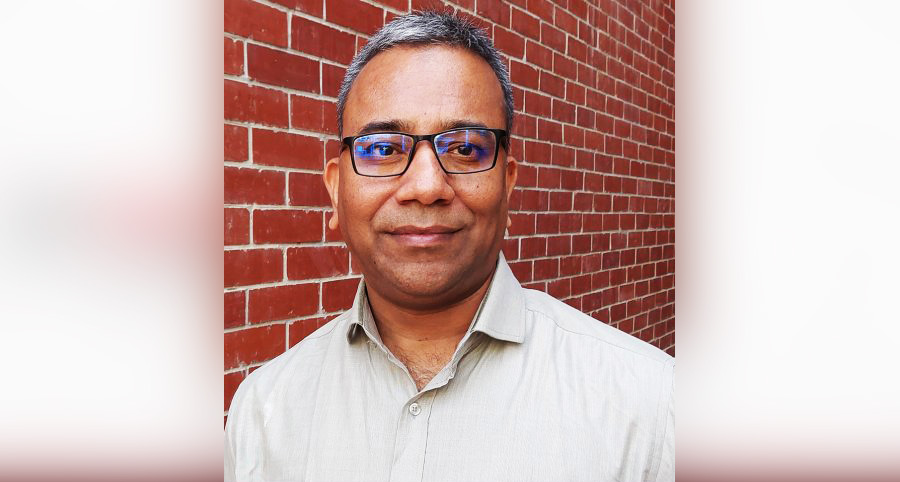
Author: Public health communication expert and Senior Lecturer, Media Studies and Journalism, University of Liberal Arts Bangladesh (ULAB).